The Pentagon Is Preparing for a 90-Day Supply Cutoff. Here Are 4 Signs Why.
Military bases have been ordered to get ready to run on their own for 90 days. Here's what's driving it — and why more families are asking how long their own kitchens would last.

Estimated 5-7 Minute Read

Sign #1: The Strait of Hormuz Is Still Choked Off — Eight Months Later
When the war with Iran began on February 28, Iran shut down the Strait of Hormuz — the narrow waterway that normally carries about a fifth of the world's oil.
Eight months later, it still isn't running normally.
This week alone, Iran's Revolutionary Guard reported several tankers catching fire after striking mines while trying to pass through. And Tehran says it won't reopen the strait until its demands are met.
Most Americans think of Hormuz as a gas-price story.
But it's also one of the world's most important routes for fertilizer and diesel — the two things every farm in America runs on.

Sign #2: The Pentagon Ordered Military Bases to Prepare for 90 Days on Their Own
On September 30, Defense Secretary Pete Hegseth signed a memo launching a new program called FORTRESS.
"Starved out, shut down, or cut off." — The three outcomes FORTRESS is designed to prevent, according to Defense Secretary Pete Hegseth
The goal: major U.S. military bases must be able to keep operating for at least 90 days if they're cut off from outside supplies.
That means keeping the power on, fuel and water stocked, and communications running — even if civilian infrastructure goes down.
To be clear, this is a plan for military bases, not households.
But when the Pentagon decides its own bases need 90 days of self-sufficiency...
It's worth asking a simple question: how many days could your family go?
And that's exactly the question more American families are starting to ask.

Sign #3: The Pentagon Expects Supply Chains to Break in the Next Major War
The reasoning behind the 90-day standard is blunt.
Pentagon spokesperson Sean Parnell said that when the next major conflict comes, "global supply chains will break."
That's why the plans reportedly include backup power grids, large battery banks — even portable nuclear reactors — so bases can disconnect from the civilian grid if they have to.
A former Air Force official warned that adversaries would likely go after the softest targets first. Not military bases — public works.
Some parts of the plan could take years to finish. Military planners aren't waiting for a crisis to start preparing.

Sign #4: The Food Shock From the War Is Only Now Arriving
Here's what most people miss: food reacts to a crisis much more slowly than gas prices do.
Fertilizer is made from natural gas. Before the war, about a third of the world's seaborne fertilizer moved through the Strait of Hormuz.
Since then, urea shipments from Gulf exporters have dropped by about 85%, and diesel exports from the Middle East have fallen by more than half. Global wheat prices are up more than 30% this year, and a UN agriculture fund reported a 13% jump in global farm prices in the third quarter alone.
Agricultural economists at the University of Illinois say the bigger risk for American farmers is the 2027 crop — because the fertilizer for next year's harvest is being bought right now, at today's prices.
So far, Americans are mostly feeling this at the checkout counter, in higher prices — not empty shelves. But food inflation is expected to keep climbing into 2027.
And families who can grow some of their own food are far less exposed to it.

Three Days of Food Gets You Through a Storm. What About 90?
No one knows exactly how the next few months will play out.
The war could end. It could escalate. Prices could ease — or keep climbing.
But governments on both sides of the Atlantic are clearly preparing for disruption.
The Pentagon wants its bases ready to stand alone for 90 days.
In October, the British government launched a national campaign asking every household to keep at least three days of food and water at home.
Within days, tinned food, bottled water, and radios were selling out in British stores.
Three days of supplies can get you through a power cut.
Ninety days is a different question entirely.
And stored food alone rarely covers it.
That's why the most resilient households don't just stockpile food.
They keep the ability to grow it.

The One Thing Most People Overlook: 90 Days Is About One Growing Season
When people think about being prepared, they think about canned goods and bottled water.
Very few think about seeds.
But many common vegetables go from seed to harvest in 90 days or less.
Radishes can be ready in about a month.
Leaf lettuce, spinach, and bush beans in roughly 45 to 60 days.
Zucchini isn't far behind.
In other words, the same 90-day window the Pentagon is planning around is roughly one growing season.
But only if you already have the seeds — and you plant before you need them.
Because when a crisis hits, preparedness supplies are often the first things to sell out. Britain just saw it happen in a matter of days.
Your children.
Your parents.
Your family.
A garden can't be rushed. The time to have a 90-day food plan is before you need one.
Because once the shortage starts, it's already too late to plant.

Which Is Why We Created The TruHarvest Survival Seed Vault
You can't control what happens in the Strait of Hormuz.
You can't control fertilizer prices or diesel exports.
You can't control the supply chain.
And you certainly can't control the next round of headlines.
But you can control whether your family has a way to grow its own food if it ever needs to.
That's exactly why we created the TruHarvest Survival Seed Vault.
A long-term food security kit designed to give your family the ability to grow fresh food at home — without depending entirely on grocery stores or supply chains.
Over 16,000 seeds across 35 varieties of non-GMO heirloom vegetables, herbs, and fruits. Sealed for long-term storage. Ready to plant in a backyard, raised bed, or container garden.
Many emergency preparedness products cost hundreds of dollars. We wanted to make real food independence affordable for everyday American families.
Because when supply chains are under strain, the ability to feed your family shouldn't be reserved for governments, preppers with acres of land, or people with unlimited budgets.
The Pentagon shouldn't be the only one with a 90-day plan.

Why Most Seed Vaults Fail
Especially During a Long Disruption...
Most seed products are built for gardening hobbyists.
Not for a 90-day plan.
They're designed to give you a fun weekend project, a few tomato plants, or a small herb garden on your kitchen windowsill.
But when supply chains are strained for months, the things that matter most are variety, viability, and the ability to actually help sustain a family — not just grow a few herbs.
That's where most ordinary seed packets fall short.
Because once you need to depend on them — truly depend on them — a small selection of low-yield seeds that won't grow true when replanted isn't going to go very far.
That's why the TruHarvest Survival Seed Vault was designed differently.
With over 16,000 seeds across 35 non-GMO heirloom varieties, sealed for long-term storage, and chosen for nutritional variety and yield...
Heirloom seeds can be saved from your harvest and replanted the following season — so one vault can keep producing well beyond the first 90 days.
TruHarvest isn't just another seed packet.
It's a long-term food independence kit designed for the moments when having your own food supply matters most.

Why Most Other Seeds Solutions Fail
Especially When You Need Them Most...
| TruHarvest | Cheap Seed Packs | |
|---|---|---|
| 16,000+ Seeds Included | ✓ | × |
| 35 Nutritional Varieties | ✓ | × |
| 100% Non-GMO Heirloom | ✓ | × |
| Replant Every Season Forever | ✓ | × |
| Sealed for Long-Term Storage | ✓ | × |
| Designed for Food Independence | ✓ | × |
Real People, Real Results
Hear from our happy customers
 ★★★★★
"During the Texas snowstorm in 2021, our grocery store was completely shut down for two weeks. The only reason my family had food was because of what we had already grown ourselves."
Susan T.
 ★★★★★
"I bought a bag for myself and one for each of my kids. Hopefully we never need them, but knowing my family can grow their own food if something ever happens gives me a lot more peace of mind."
Marcus W.
 ★★★★★
"Most people don't think about food security until something happens. I'd rather have it and never need it than need it and not have it."
James R.
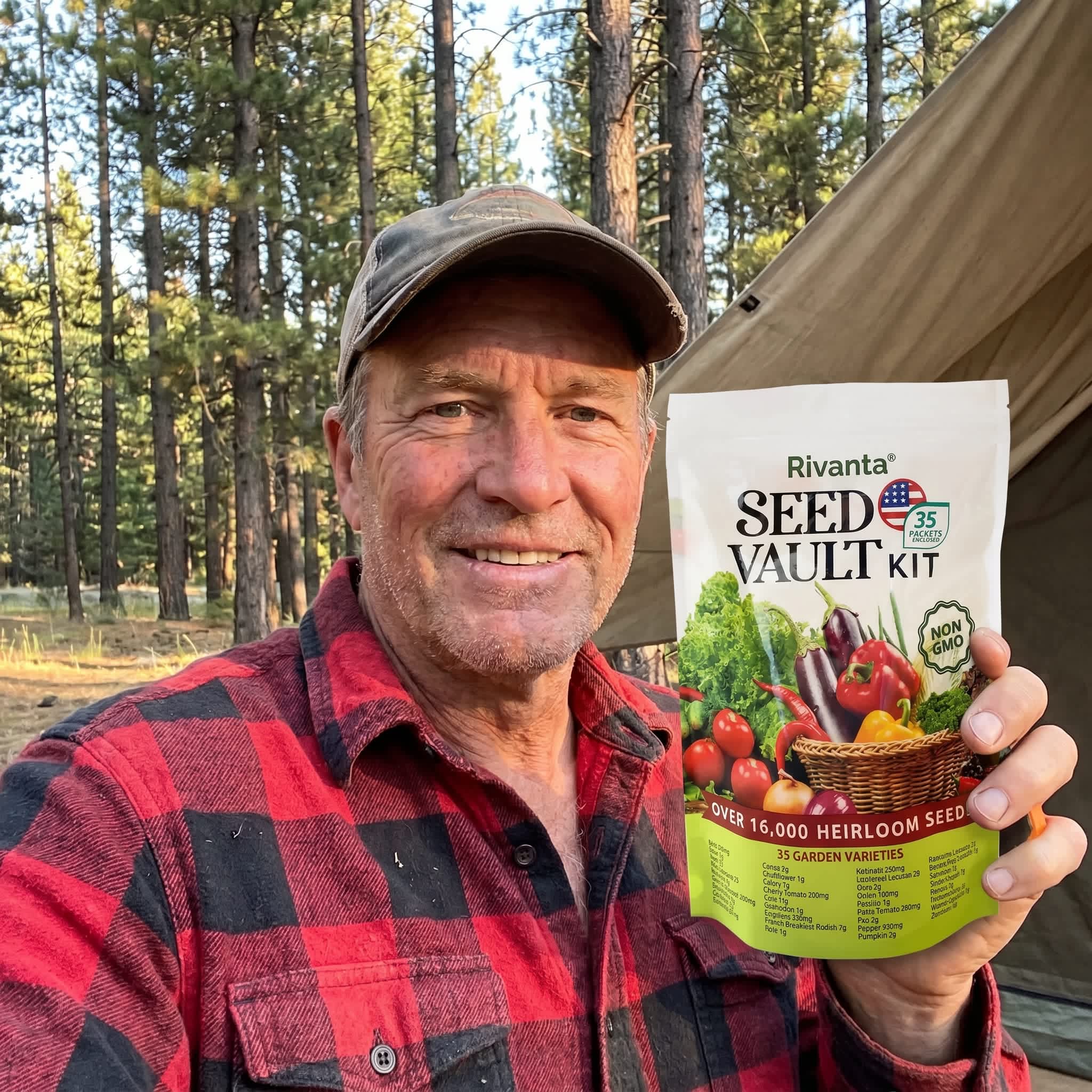 ★★★★★
"This isn't some cheap bag of seeds. Every variety is non-GMO heirloom, which means the seeds are pure and I can save and replant them every single season."
Robert M.
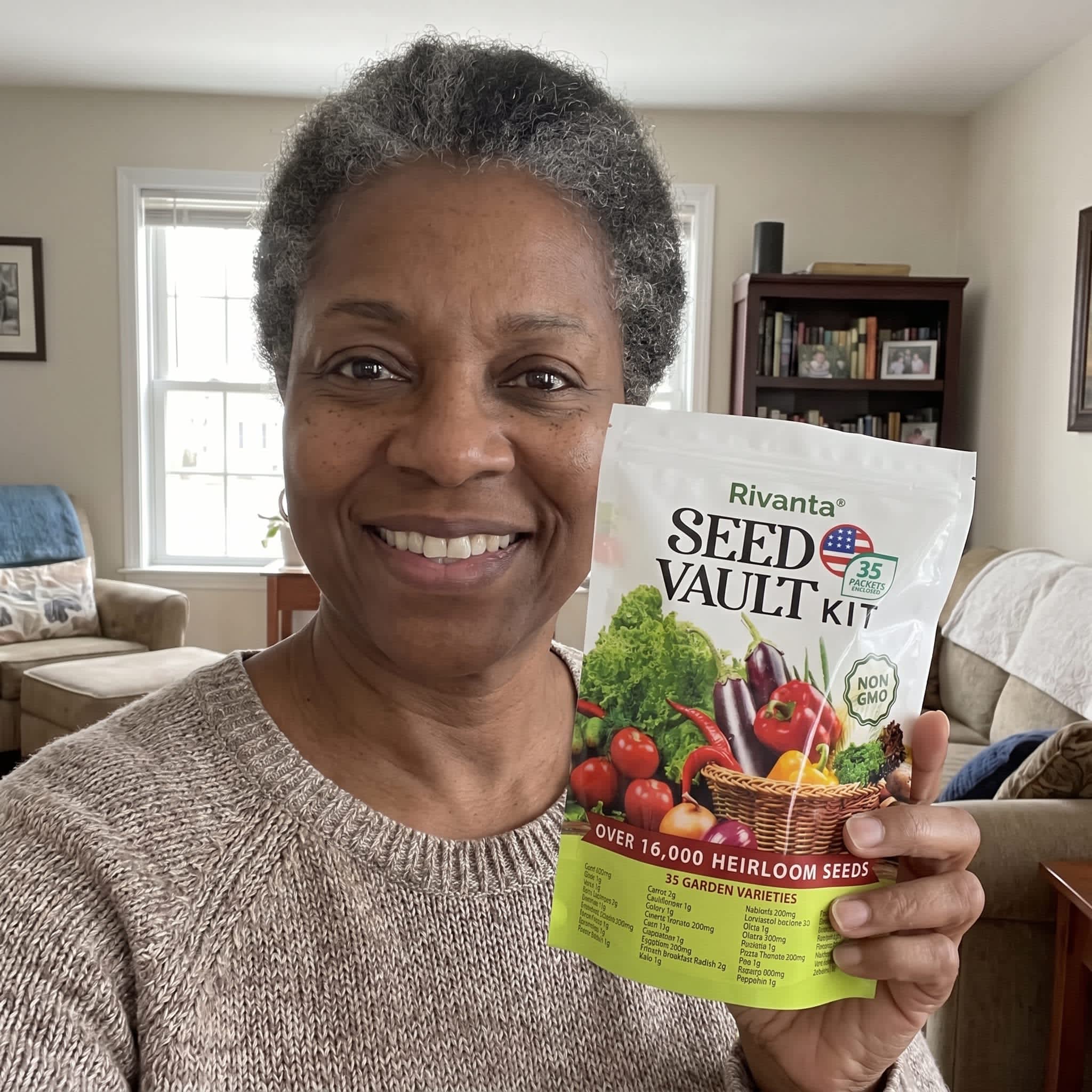 ★★★★★
"The fact that it has over 16,000 seeds across so many different varieties is what sold me. If something ever happens, I need to be able to grow more than just one type of food."
Angela B.
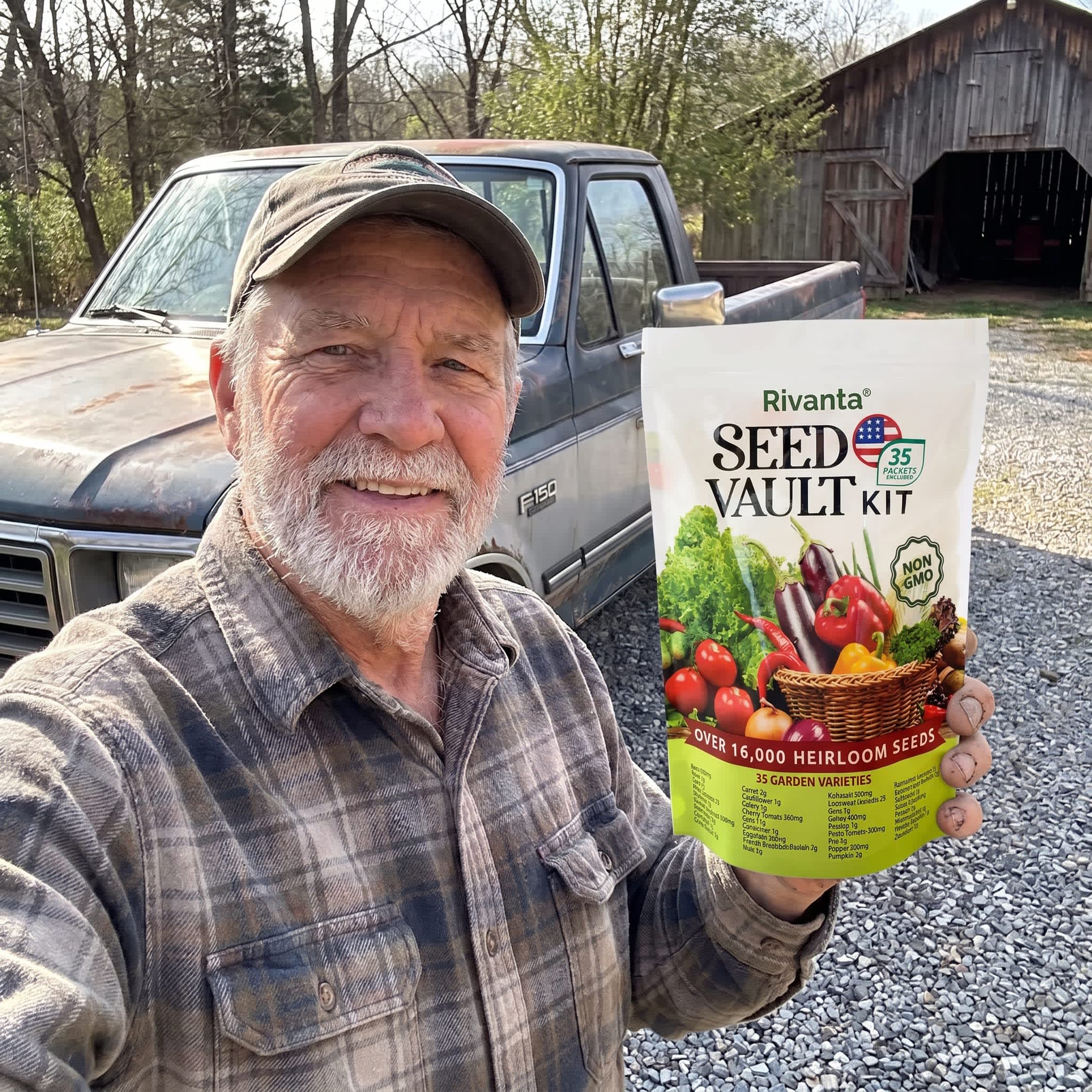 ★★★★★
"I keep one in my garage and another in my pantry. It gives me peace of mind knowing I have a backup food supply if I ever need it."
David H.
The Only Problem...

When Britain asked households to stock up in October, tinned food, bottled water, and radios started selling out within days.
Preparedness supplies tend to move fast whenever supply-chain headlines heat up — and seed kits are often among the first things people look for.
That's why inventory can move quickly during periods like this one.
If the "Claim Black Friday Pricing" button is still visible below, there may still be units available from our current inventory allocation.
We recommend checking availability now, while the Black Friday sale remains active and while there's still time to plan your first planting.
Because the best time to have a 90-day food plan is before you ever need one.